Hanuman Dhoka Durbar Square Conservation Programe
Hanuman-Dhoka Durbar Square
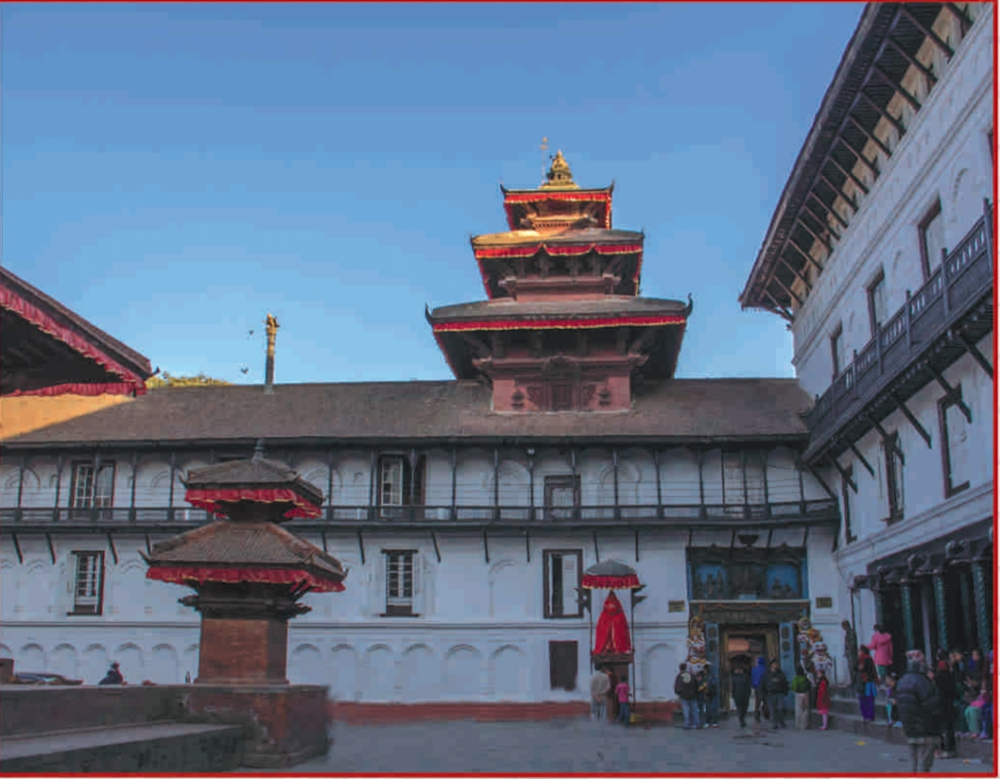
Most of the cultural centres of Nepal are concentrated around the Kathmandu valley, among those cultural sites, the important one is the Hanuman-Dhoka Durbar Square. Located at he heart of ancient city Kathmandu, it is a compiles of beautiful temples and shrines, both Hindu and Buddhist Most of them are built in the pagoda style embellished with intricately carved exteriors, built between 12th and 18th centuries. The Durbar Square, with its old temples, palaces, epitomizes the religious and cultural life of the people. It is here that kings of Nepal are crowned and their coronations solemnized. Until the early 20 th Century the Durbar Square was the King's residence. It is living open museum of Nepal. The name Hanuman-Dhoka Durbar came from the statue of Hanuman established by King Pratap Malla at the entrance of the royal palace in 1672 A.D. The nine-storeyed residence built by King Prithvi Narayan Shah in 1770, is called Basantapur Durbar. The whole complex is also Known as Kathmandu Durbar Square. The palace complex was originally founded during the Lichchhavi period, but as it stands today most of it was constructed by King Pratap Malla in 17th Century. The palace was renovated many times in later years. The architectural remains and art objects within the palace complex now existing are from Malla, Shah and Rana periods of Nepal. The Durbar Square area is actually made up of two subareas, The outer complex is renowned for numerous interesting temples as Kumari Ghar, Kasthmandap, ShivParbati Temple, Jagannath Temple, Big Bell etc. while the inner complex comprises the old palace area, Hanuman-dhoka and its courtyards as Nasal Chowk, Mul Chowk, Sundari Chowk, Lohan Chowk, Mohan Chowk, Basantapur Durbar and others. There are many temples in the inner complex also, most notable being the Taleju Temple dedicated to female royal deity. The area includes ten courtyards these days, but prior the great earthquake of 1934, the area was expanded upto New Road Gate inculding thirty five courtyards. The Hanuman-dhoka Royal Palace is included in the Protected Mounument Zone along with other private buildings. The site is enlisted in the World Heritage Site of UNESCO along with other six monument zones of the Kathmandu Valley in October 1979. Besides the magnificent temples and shrines, other interesting aspects are various festivals, cultural activites and traditions people are following from centuries, which are presented in the Durbar Square. The major festivals include Indrajatra, Dashain, Gaijatra, Machhindra-nath jatra etc. These are the occasion when the people from all over the city gather here to mark their centuries old tradition. All the carvings and architecture in this area are exceptionally fine which make the architecture in this Hanuman-dhoka Durbar Square among the most important sights for travellers to see.